Plastic Resin Materials
Decades of material science expertise, matched to your application.
From everyday commodity parts to FDA-registered medical components.
The Right Resin Changes Everything
Choosing the right plastic resin is one of the most important decisions in any molding project. The wrong material can lead to product failure in the field. The right one delivers durability, performance, and a predictable cost. With thousands of resins on the market, narrowing the field can feel overwhelming, which is why our team works directly with you and our resin suppliers to match material to application, not the other way around.
We ask the questions that matter before a single part is molded. Does it need to resist specific chemicals? Does it need to be UV stable for outdoor use? Does it need to be fire retardant? What are the cosmetic and finish requirements? The answers determine whether a commodity-grade or engineering-grade resin, and which one specifically, is the right call for your budget and your performance requirements.

Commodity-Grade Resins
Polypropylene, Polystyrene, and High Impact Polystyrene (HIPS). Affordable, easy to process, and ideal for high-volume everyday parts.

Engineering-Grade Resins
Polycarbonate, Nylon, Acrylic, Acetal, and ABS. Specialty resins chosen for strength, heat resistance, and durability in demanding or regulated applications.

Material Selection Guidance
Our team reviews chemical resistance, UV stability, fire retardancy, and cosmetic requirements with you up front, so the material is right the first time.

Sustainable Practices
We use non-toxic colorants and efficiently recycle scrap plastic back into production, keeping our processes safe for the environment without adding cost.
Engineered for Regulated and Demanding Industries
Whether your product needs to withstand extreme temperatures, resist harsh chemicals, or meet strict medical-grade requirements, our engineering-grade resins are chosen specifically to meet the tight tolerances, down to 2 microns, that regulated industries demand. We hold ISO 9001:2015 certification and are an FDA-registered facility, so material selection for medical and other regulated components is built into a documented quality system, not an afterthought.
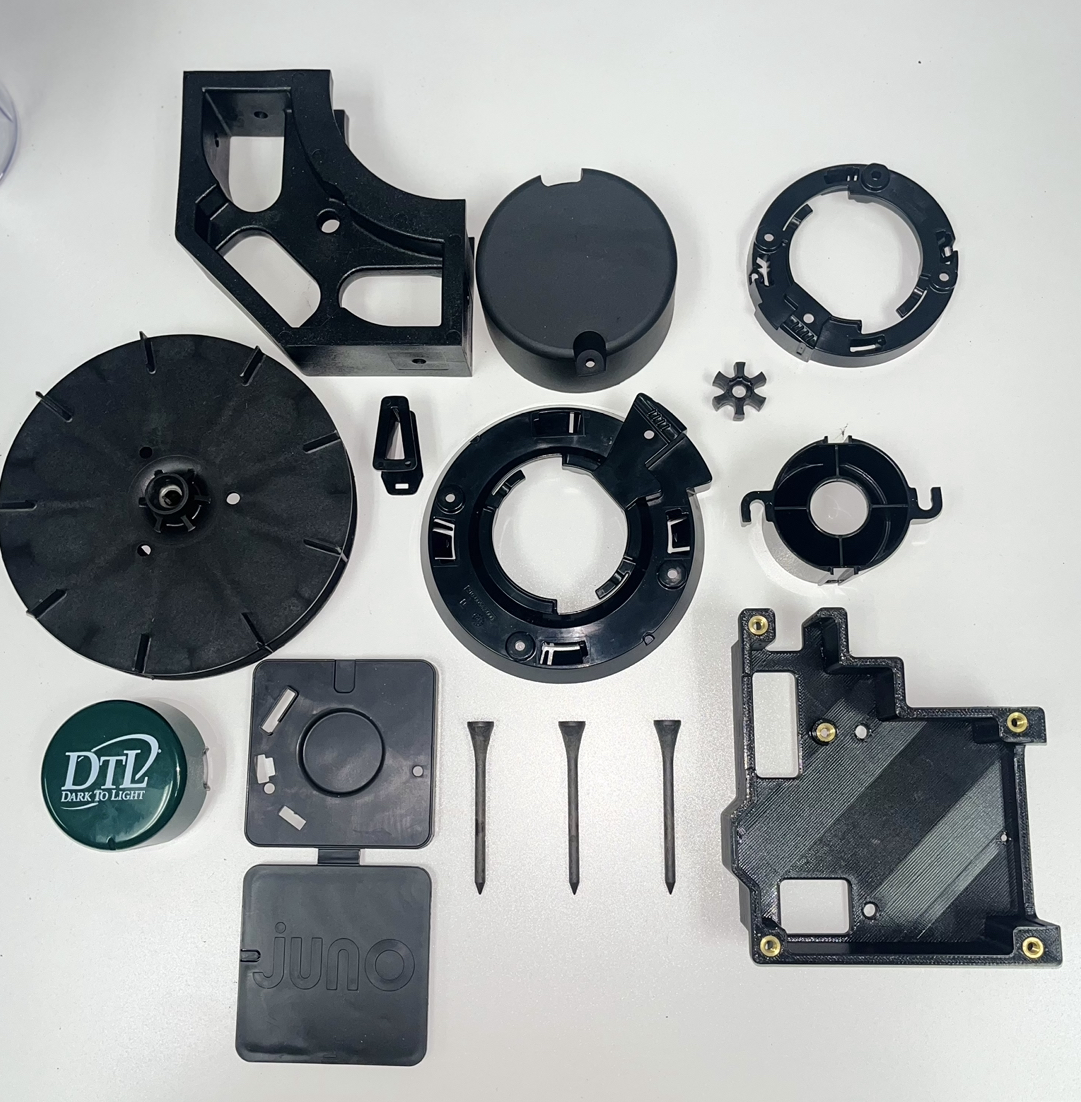
- Medical: precision components meeting strict regulations and tight tolerances.
- Automotive: durable parts capable of withstanding extreme temperatures and vibration.
- Electronics: protective housings and connectors with precise dimensions.
- Agriculture: components resistant to UV exposure, harsh chemicals, and mechanical stress.
- Warehousing & Logistics: durable parts for automated systems and material handling.
Frequently Asked Questions
What is the difference between commodity-grade and engineering-grade resin?
Commodity-grade resins like Polypropylene and HIPS are affordable and process quickly, making them ideal for everyday, high-volume parts. Engineering-grade resins like Polycarbonate, Nylon, Acrylic, Acetal, and ABS cost more upfront but offer superior strength, heat resistance, and chemical durability for demanding or regulated applications.
I don’t know which plastic resin to use for my product. Can you help?
Absolutely. Material selection is a core part of our service. We’ll walk through your product’s requirements, including temperature resistance, chemical exposure, UV stability, flexibility, and cosmetic finish, and recommend the most cost-effective, performance-driven resin for your application.
Can Crestwood source materials for medical or other regulated components?
Yes. As an ISO 9001:2015 certified, FDA-registered facility, we regularly select and mold engineering-grade resins for medical device components and other regulated industries where material traceability and tight tolerances are essential.
Not Sure Which Material Is Right?
Every project starts with a conversation about your part, your performance requirements, and your budget. Let’s find the right resin together.
CONTACT US